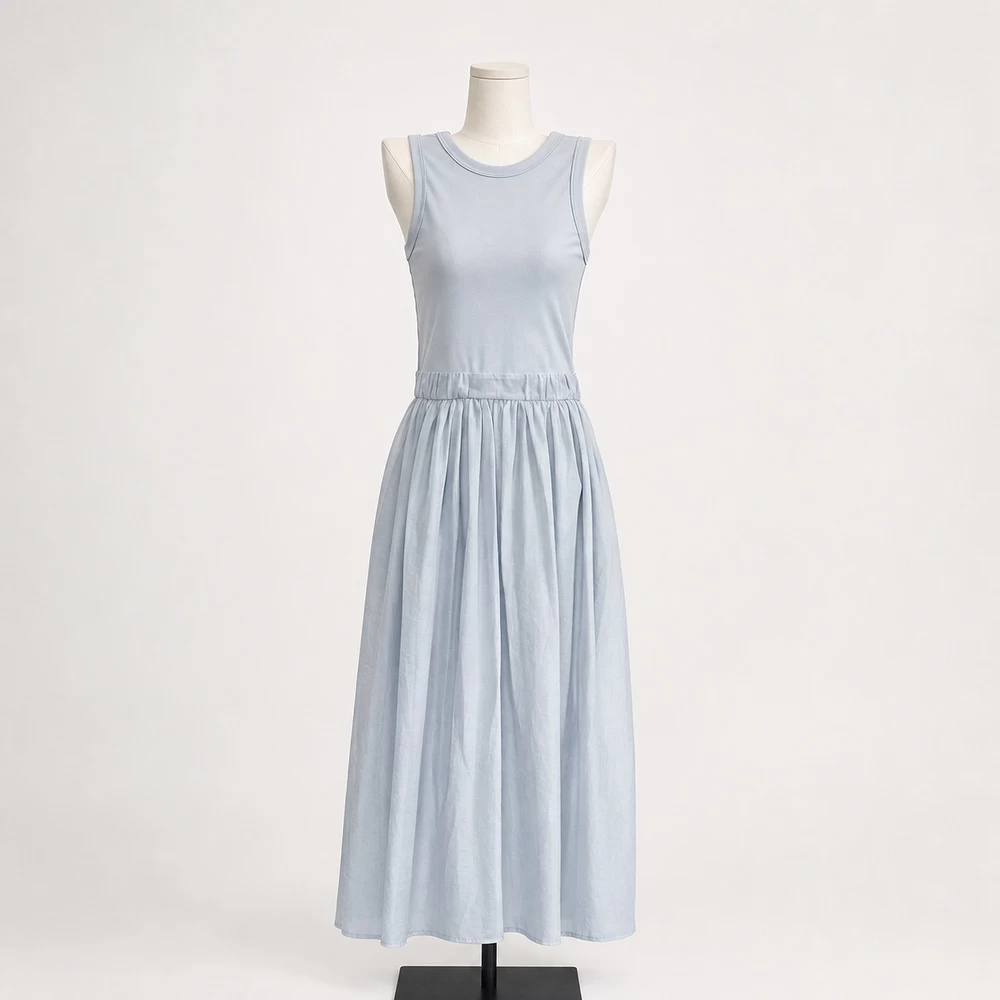
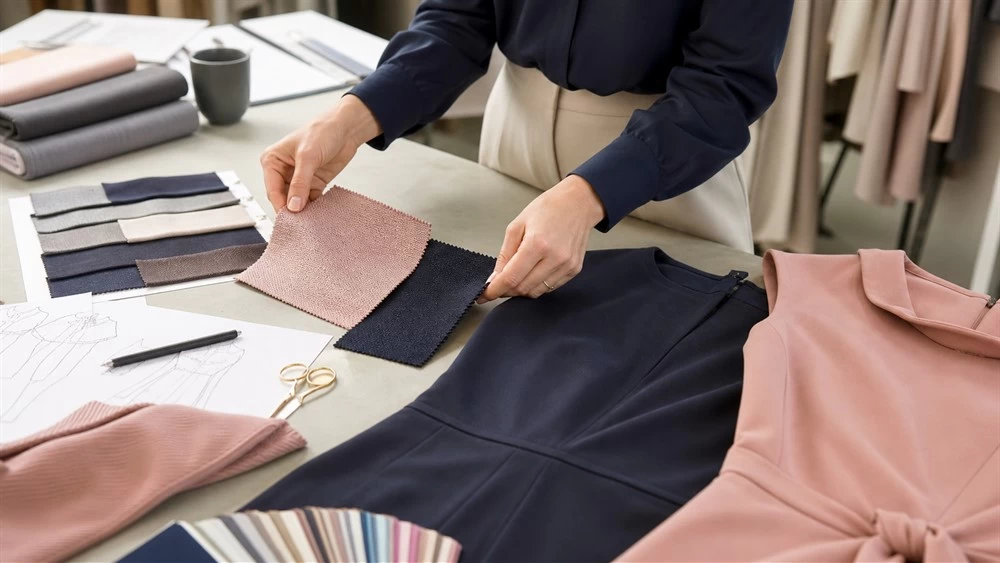
Choosing between woven and knit fabric changes how a dress fits, moves, recovers, and performs after care. Buyers should begin with the intended silhouette and wearer experience, then translate those goals into testable fabric requirements.
Understand the structural difference
Woven fabrics are formed from interlaced warp and weft yarns, which generally support crisp shapes and controlled dimensions. Knit fabrics are formed from interlocking loops, so they commonly offer more stretch and body movement.
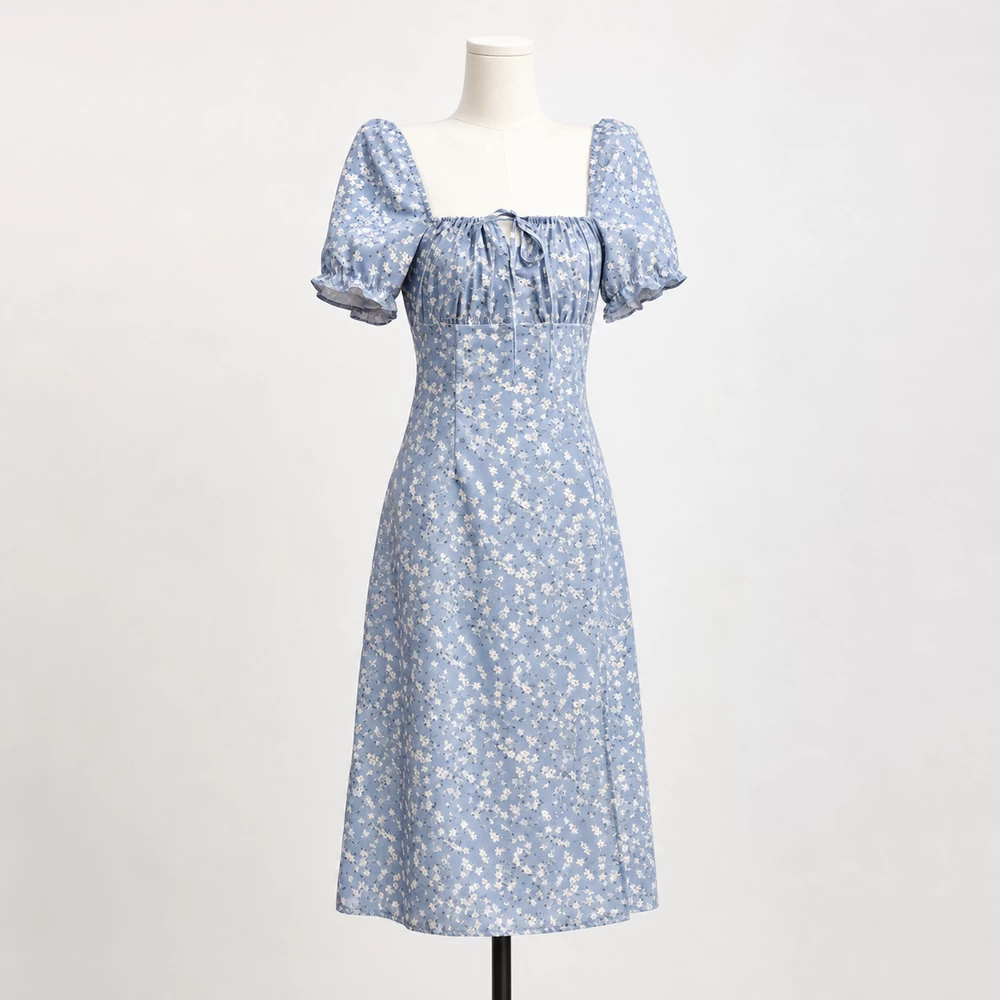
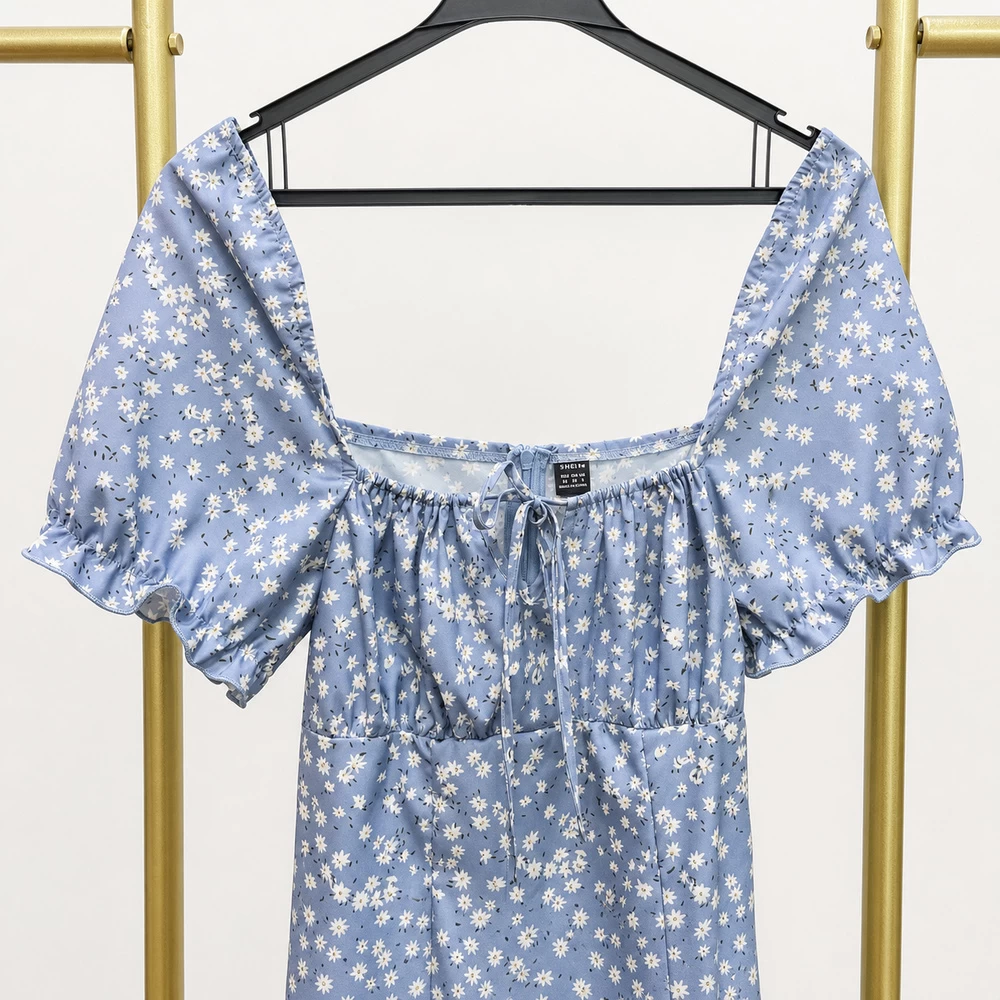
A flowing floral midi dress may use a lightweight woven fabric to preserve sleeve and skirt shape, while a close-fitting casual dress may benefit from knit recovery. These are design directions, not automatic rules.
| Buyer question | Woven direction | Knit direction |
|---|---|---|
| Desired shape | Crisp or structured | Fluid or body-following |
| Stretch source | Fiber blend or mechanical give | Loop structure plus fiber blend |
| Fit sensitivity | Ease and closures matter | Recovery and negative ease matter |
| Edge behavior | May fray | May curl or stretch |
Match fabric behavior to the silhouette
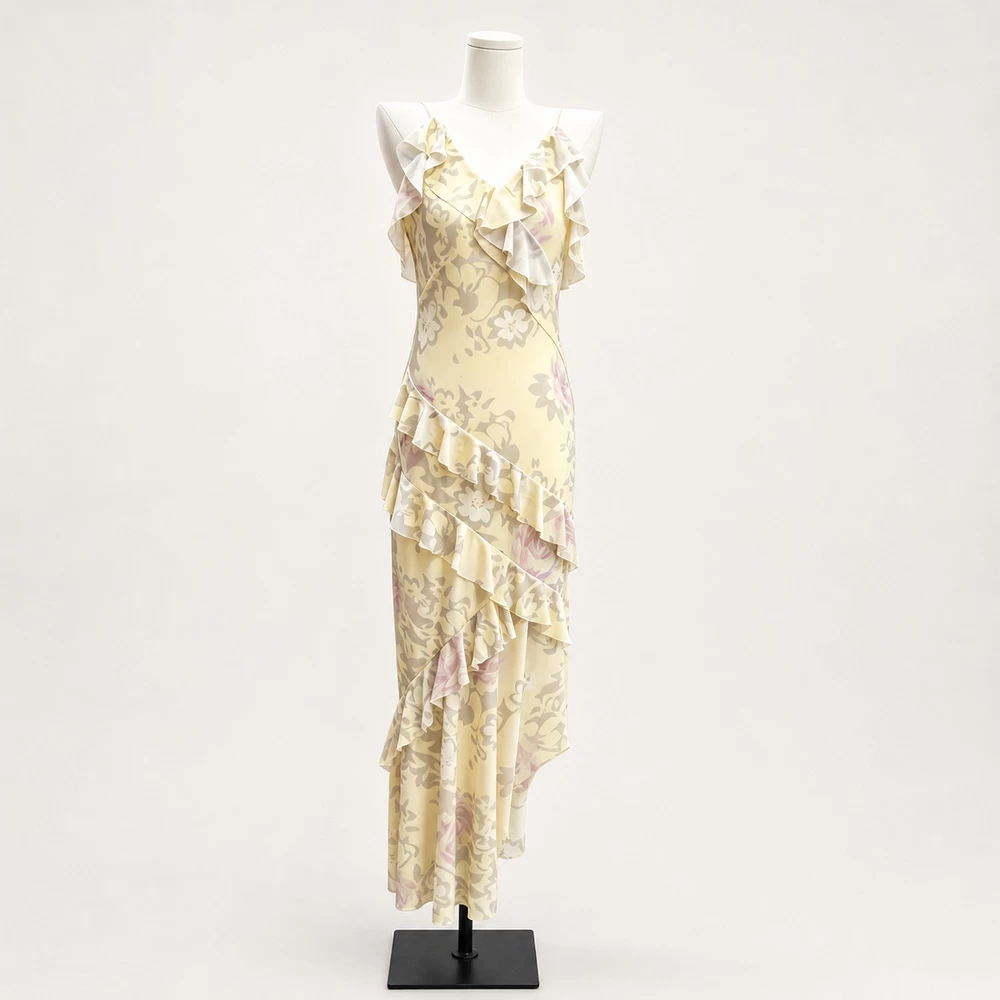
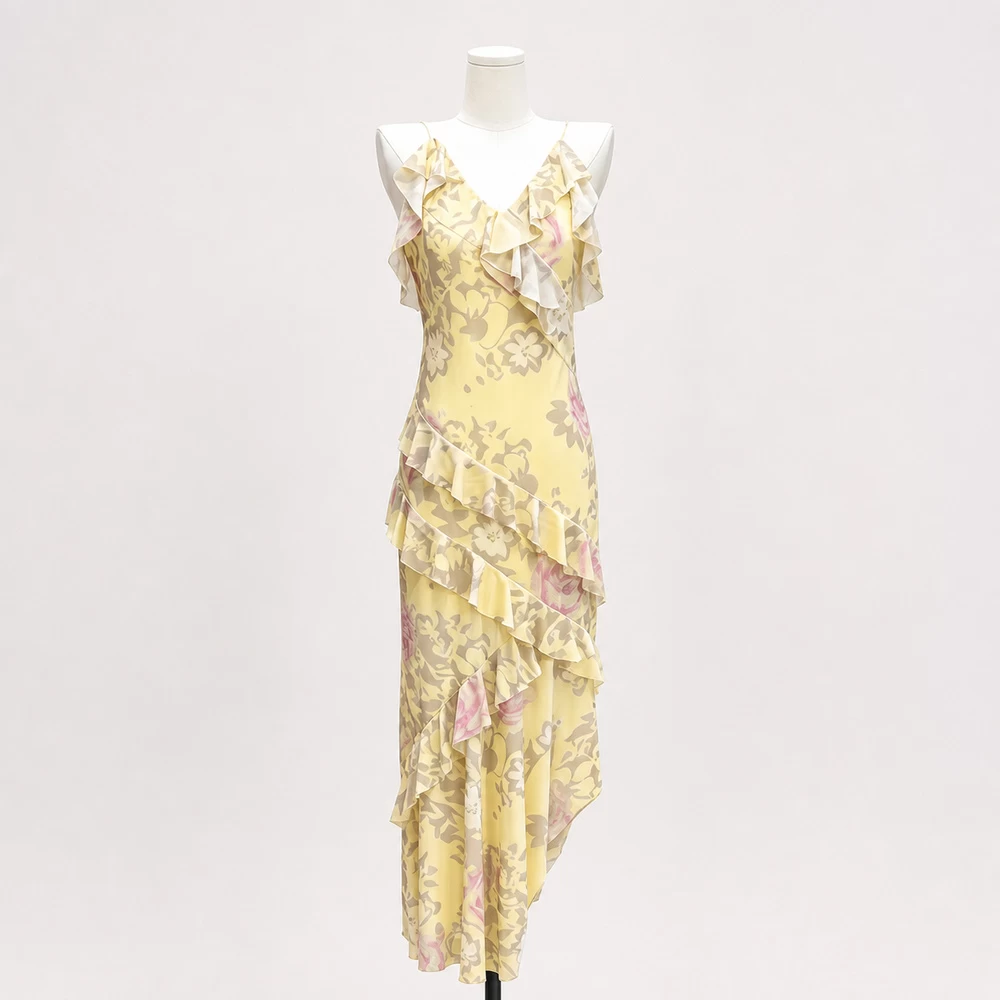
Start with the garment’s volume, support, closures, lining, and key movement areas. Puff sleeves, tiers, gathers, and shaped waist seams respond differently to fabric weight and drape.
Assess the fabric in motion and over a contrasting background. A swatch that looks opaque on a table may become sheer under tension or bright light, especially in pale colors.
- Drape for skirts, ruffles, and gathers
- Recovery at waist, seat, and elbow areas
- Opacity with and without lining
- Surface stability for printing, embroidery, or pleats
Specify tests before sample approval
Ask for a fabric specification and agree which tests matter for the end use. Common review points include dimensional change, spirality for knits, skew for wovens, pilling, snagging, colorfastness, and seam performance.
Testing methods and acceptance limits depend on the market, product, material, and buyer standard. Confirm them with the supplier and testing provider based on the final specification.
Evaluate cost beyond the fabric price
Fabric width, marker efficiency, shrinkage allowance, matching requirements, lining, and handling difficulty all affect garment cost. A lower price per yard can produce a higher finished cost if consumption or defect risk increases.
Compare several finished silhouettes in the women’s apparel collection, then request swatches and a sample in the intended quality before committing to bulk material.
Buyer FAQ
Is knit fabric always stretchier than woven fabric?
Knit construction usually adds stretch, but fiber, yarn, density, and finish matter. Some stretch wovens can outperform stable knits in a specific direction.
Which fabric is better for a tiered dress?
The answer depends on desired volume, drape, opacity, and care. Test a full tier or sample because gathered layers can change the visual weight.
Should a dress be lined?
Consider opacity, comfort, structure, static, and seam coverage. Confirm the lining decision on the final color and fabric.
Can one pattern work for woven and knit versions?
Usually not without adjustment. Stretch, recovery, ease, seam choice, and construction can require a different pattern.
Prepare a clearer sourcing request
Share the dress silhouette, fabric or fiber direction, size range, intended use, colors, customization, quantity, packaging, destination, and timing so the material discussion can start from clear performance needs.
Contact us